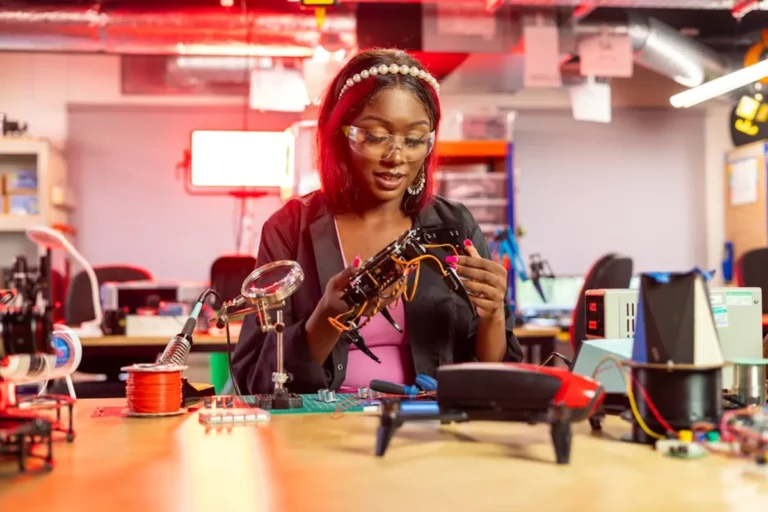
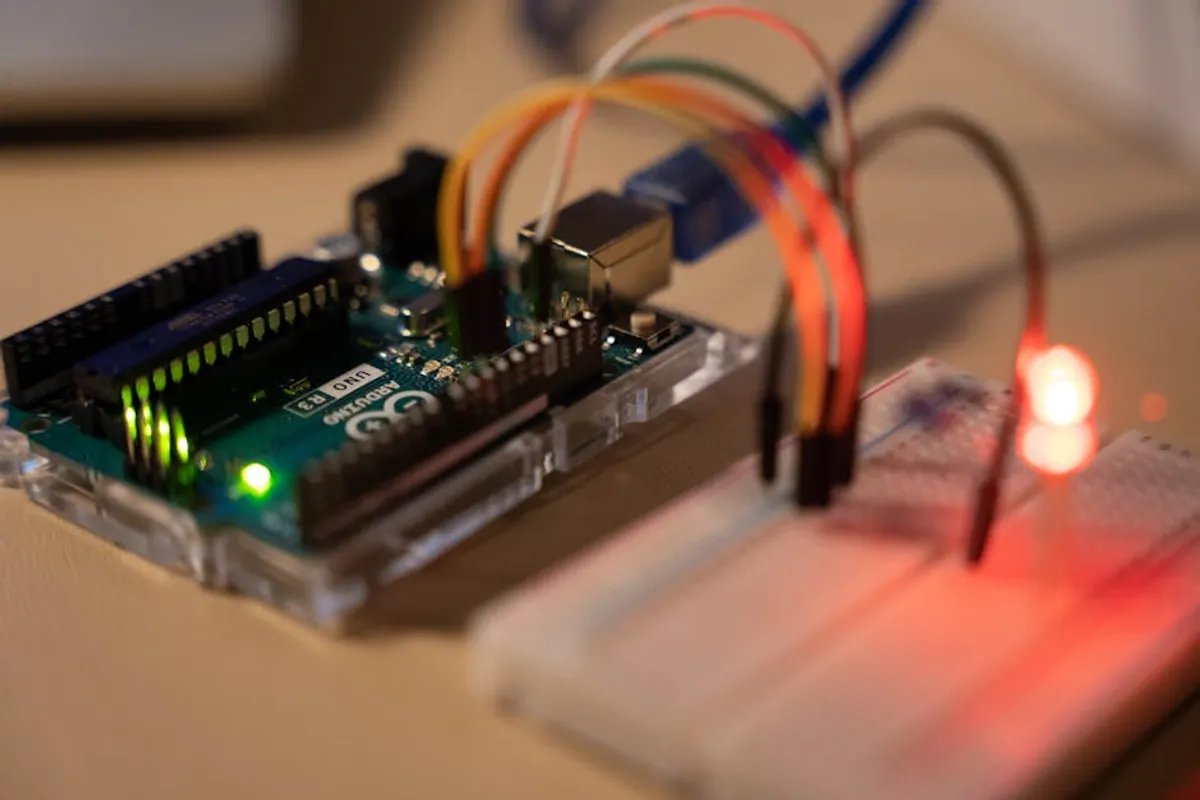
Engaging with microcontroller projects offers a direct, practical pathway to understanding embedded systems, programming logic, and hardware interaction. For professionals, hobbyists, and students alike, hands-on application solidifies theoretical knowledge, translating abstract concepts into tangible, functional devices. This approach is critical for developing problem-solving skills, debugging techniques, and a comprehensive grasp of electronics and software integration. The projects outlined here are selected for their educational value, ranging from foundational exercises in digital control to more complex systems involving sensors, actuators, and communication protocols, each designed to build specific, marketable skills through practical implementation.
What to Look For in a Microcontroller Project
Selecting the right microcontroller project depends on your current skill level, learning objectives, and available resources. Evaluate potential projects based on these key considerations:
- Learning Objectives: Identify the specific skills you aim to acquire. Do you want to master digital input/output, sensor integration, motor control, wireless communication, or data logging? Each project offers distinct learning opportunities.
- Complexity Level: Begin with projects that align with or slightly challenge your current understanding. Starting too complex can lead to frustration, while overly simple projects might not provide sufficient growth. Projects are often categorized as beginner, intermediate, or advanced.
- Component Cost and Availability: Assess the budget required for components (microcontroller board, sensors, actuators, displays, wires, resistors). Ensure components are readily available from suppliers.
- Required Tools: Determine if specialized tools like a soldering iron, multimeter, breadboard, or power supply are necessary. Factor in the cost and learning curve associated with these tools.
- Documentation and Community Support: Look for projects with clear, well-documented instructions, schematics, and example code. Active online communities and forums can provide invaluable support for troubleshooting and expansion.
- Real-world Applicability: Consider how the skills learned from a project can be applied to other areas or professional contexts. Projects that mimic industrial processes or common IoT applications often offer the most transferable knowledge.
- Time Commitment: Estimate the time required to complete the project. Shorter projects offer quicker gratification and build confidence, while longer projects demand sustained effort and planning.
1. LED Blinker (Traffic Light Sequence)
This foundational project involves programming a microcontroller to control multiple LEDs, sequencing their illumination to simulate a traffic light. It serves as an entry point into digital output control, timing, and basic state machine logic. Learners connect LEDs, resistors, and the microcontroller, then write code to manage the on/off states and delays, building a tangible understanding of how code translates to physical action.
Best for: Absolute beginners in embedded systems, those seeking to understand digital I/O, timing functions, and basic sequential programming.
Pros:
- Direct visual feedback for code execution.
- Minimal component count and low cost.
- Introduces fundamental concepts like digital output, delays, and loops.
- Excellent starting point for debugging simple circuits and code.
Cons:
- Limited complexity, may not sustain interest for advanced learners.
- Does not involve sensor input or complex algorithms.
- Primarily teaches output control, not data processing.
Verdict: An indispensable first step for anyone entering the microcontroller world, providing immediate gratification and a solid grasp of basic programming-to-hardware interaction.
2. Temperature and Humidity Sensor with LCD Display
This project integrates a digital temperature and humidity sensor (e.g., DHT11/DHT22) with a microcontroller and displays the readings on a character LCD. It introduces concepts of reading data from digital sensors, interpreting sensor libraries, and outputting information to an external display. Learners gain experience with I2C or parallel communication protocols for the LCD and handling sensor data.
Best for: Beginners transitioning to sensor integration, those interested in environmental monitoring and basic data display.
Pros:
- Teaches how to interface with digital sensors and external displays.
- Introduces standard communication protocols (I2C or parallel).
- Provides practical experience in reading and processing real-world data.
- Results in a useful, functional device for environmental monitoring.
Cons:
- Requires careful wiring for the LCD, which can be tedious for beginners.
- Debugging display issues can be challenging without prior experience.
- Sensor calibration and accuracy considerations can add complexity.
Verdict: A highly rewarding project that bridges the gap between simple output control and useful data acquisition and presentation, foundational for many IoT applications.
3. Ultrasonic Distance Sensor (Proximity Alarm)
This project uses an ultrasonic sensor (e.g., HC-SR04) to measure distances and triggers an alarm (e.g., LED or buzzer) when an object comes within a specified range. It introduces pulse-width measurement, timing-based distance calculation, and conditional logic for triggering actions. Learners understand how sound waves can be used for non-contact distance sensing, a key concept in robotics and automation.
Best for: Learners interested in basic robotics, automation, and non-contact sensing principles.
Pros:
- Demonstrates real-time data acquisition and decision-making.
- Introduces timing-critical programming and pulse generation/measurement.
- Components are inexpensive and widely available.
- Provides a clear, practical application of sensor data.
Cons:
- Accuracy can be affected by surface texture and environmental factors.
- Requires precise timing control in code, which can be a learning curve.
- Limited to line-of-sight detection.
Verdict: An excellent project for understanding how to integrate sensors for spatial awareness and implementing reactive behaviors in embedded systems.
4. Servo Motor Control (Pan-Tilt Mechanism)
This project involves controlling one or more servo motors to achieve precise angular positioning, often arranged in a pan-tilt configuration. Learners explore Pulse Width Modulation (PWM) for motor control, understanding how varying pulse widths dictate motor position. It's fundamental for applications requiring precise movement, such as camera gimbals or robotic arms.
Best for: Those interested in robotics, automation, and precise actuator control, specifically understanding PWM.
Pros:
- Directly teaches PWM principles for analog-like control from digital signals.
- Provides immediate visual feedback on motor movement.
- Foundation for more complex robotic movements and control systems.
- Servos are relatively easy to interface and control.
Cons:
- Requires careful power supply considerations for multiple servos.
- Understanding the relationship between pulse width and angle can be abstract initially.
- Gear backlash in inexpensive servos can limit precision.
Verdict: A crucial project for anyone aiming to build systems with controlled mechanical movement, offering a deep dive into PWM and actuator management.
5. Line-Following Robot
Building a line-following robot combines multiple disciplines: sensor integration (infrared line sensors), motor control (DC motors with H-bridge driver), and basic decision-making algorithms. The robot uses sensors to detect a dark line on a light surface and adjusts its motor speeds to stay on the line. This project teaches fundamental principles of mobile robotics and feedback control systems.
Best for: Intermediate learners interested in robotics, autonomous navigation, and integrating multiple hardware components.
Pros:
- Combines sensor input with motor output for autonomous behavior.
- Introduces basic control algorithms and state machines.
- Excellent for understanding hardware-software interaction in a dynamic system.
- Provides a tangible, moving result that reinforces learning.
Cons:
- Requires more components and a chassis, increasing complexity and cost.
- Debugging motor drivers and sensor arrays can be intricate.
- Performance can be sensitive to lighting conditions and line contrast.
Verdict: A comprehensive project that challenges learners to integrate sensors, actuators, and control logic into a functional, autonomous system, highly relevant for robotics development.
6. Basic Home Automation (Smart Light Switch)
This project focuses on controlling an AC appliance, such as a light, remotely via a microcontroller, often using Wi-Fi (e.g., ESP32) and a relay module. It introduces concepts of internet connectivity, basic web servers or MQTT protocols for remote control, and safely interfacing with mains voltage (via a relay). It's a practical entry point into the Internet of Things (IoT).
Best for: Learners interested in IoT, wireless communication, and building connected devices for practical home applications.
Pros:
- Introduces Wi-Fi connectivity and network protocols (HTTP, MQTT).
- Provides experience with relay modules for controlling higher power loads.
- Results in a highly practical and expandable smart home device.
- Develops understanding of client-server communication.
Cons:
- Working with mains voltage requires extreme caution and safety measures.
- Network configuration and debugging can be challenging.
- Security considerations for IoT devices are important but often overlooked by beginners.
Verdict: An impactful project for venturing into IoT, teaching essential skills in network communication and safe control of AC devices, with direct applicability to smart home development.
7. Weather Station with Data Logging
This project combines multiple sensors (temperature, humidity, pressure, light intensity, etc.) with a microcontroller to collect environmental data. The data is then logged to an SD card or transmitted wirelessly to a cloud service. It emphasizes sensor fusion, data handling, timekeeping (RTC module), and persistent storage, crucial for long-term monitoring applications.
Best for: Those interested in data acquisition, environmental monitoring, long-term data analysis, and integrating multiple sensor types.
Pros:
- Integrates multiple types of sensors for comprehensive data collection.
- Introduces data logging to SD cards or cloud platforms.
- Provides experience with Real-Time Clock (RTC) modules for timestamping data.
- Develops skills in data processing and storage management.
Cons:
- Requires careful handling of multiple sensor libraries and data formats.
- Power management becomes critical for battery-powered, long-term deployments.
- Cloud integration adds a layer of complexity with API keys and network configuration.
Verdict: A robust project for mastering multi-sensor integration, data logging, and time-series data management, highly relevant for environmental science, agriculture, and industrial monitoring.
8. RC Car / Mobile Robot Platform
Building an RC car or mobile robot platform provides a comprehensive learning experience in motor control, power management, wireless communication (e.g., Bluetooth, RF), and chassis design. Learners build a vehicle that can be controlled remotely, integrating motor drivers, a power source, and a receiver module. This project is a stepping stone to more advanced autonomous robotics.
Best for: Intermediate to advanced learners passionate about robotics, vehicle dynamics, and remote control systems.
Pros:
- Integrates complex motor control with wireless communication.
- Offers practical experience in power distribution and battery management.
- Develops understanding of mechanical assembly and chassis design.
- Provides a highly engaging and functional robotic system.
Cons:
- Higher component cost due to motors, drivers, and chassis.
- Debugging wireless communication can be intricate.
- Requires attention to mechanical stability and weight distribution.
Verdict: A challenging yet incredibly rewarding project that consolidates knowledge in motion control, wireless interfaces, and mechanical integration, essential for any mobile robotics endeavor.
9. Simple Game Console (e.g., Pong or Snake)
This project involves creating a basic game on a microcontroller, typically using a small LCD or OLED display and input buttons. Games like Pong, Snake, or Tetris clones teach graphic rendering on embedded displays, user input handling, game logic, and state management within resource-constrained environments. It's an excellent way to learn about display drivers and real-time interaction.
Best for: Those interested in embedded graphics, user interface design, and real-time game development on limited hardware.
Pros:
- Provides a fun and engaging way to learn about display drivers and graphics.
- Teaches fundamental game logic, collision detection, and scorekeeping.
- Develops skills in handling multiple inputs simultaneously.
- Offers immediate, interactive feedback on programming efforts.
Cons:
- Display memory and processing power can be significant constraints.
- Optimizing graphics routines for speed can be challenging.
- Requires careful state management to avoid bugs in game logic.
Verdict: A creative project for exploring embedded graphics and interactive systems, providing valuable experience in resource management and real-time user experience design.
10. Custom Macro Pad / Keyboard
Building a custom macro pad or a small keyboard involves matrix scanning for key presses, debouncing inputs, and emulating a USB Human Interface Device (HID). This project teaches advanced input handling, understanding USB communication protocols, and practical application of switch mechanics. It results in a highly personalized and commercially useful peripheral.
Best for: Learners interested in human interface devices, USB communication, matrix keypads, and custom peripheral development.
Pros:
- Teaches advanced input techniques like matrix scanning and debouncing.
- Provides practical experience with USB HID emulation.
- Results in a highly functional and customizable desktop tool.
- Develops understanding of how peripherals communicate with computers.
Cons:
- Requires soldering for switches and diodes, which can be precise.
- Understanding USB HID descriptors can be complex.
- Designing a functional PCB or wiring a breadboard can be intricate.
Verdict: An excellent project for delving into human-computer interaction at a low level, providing skills directly applicable to custom input devices and embedded USB applications.
11. SD Card Data Logger with Real-Time Clock
This project focuses on reliably storing sensor data or system events onto an SD card, timestamped using a Real-Time Clock (RTC) module. It emphasizes file system management, SPI communication for the SD card, and precise timekeeping. This is crucial for applications requiring non-volatile storage of data over extended periods, like scientific experiments or industrial monitoring.
Best for: Those needing to implement robust data storage, understand file systems on embedded devices, and manage time-critical data.
Pros:
- Teaches practical file system interaction on embedded systems.
- Introduces SPI communication protocol for memory cards.
- Provides experience with RTC modules for accurate time stamping.
- Creates a portable and self-contained data recording solution.
Cons:
- Debugging SD card issues (initialization, corruption) can be challenging.
- File system overhead can impact performance on resource-limited microcontrollers.
- Power management is critical for long-term, unattended data logging.
Verdict: A fundamental project for mastering persistent data storage and time management in embedded systems, essential for any application requiring historical data records or event logging.
12. Automated Plant Watering System
This project combines a soil moisture sensor, a water pump, and a microcontroller to automatically water plants based on soil dryness. It involves reading analog sensor data, controlling a motor (pump) via a relay or motor driver, and implementing scheduling or threshold-based logic. This system applies principles of environmental control and closed-loop automation.
Best for: Learners interested in environmental control, smart agriculture, and practical automation solutions for everyday problems.
Pros:
- Integrates analog sensor input with actuator control for a practical outcome.
- Teaches threshold-based decision making and basic control loops.
- Results in