
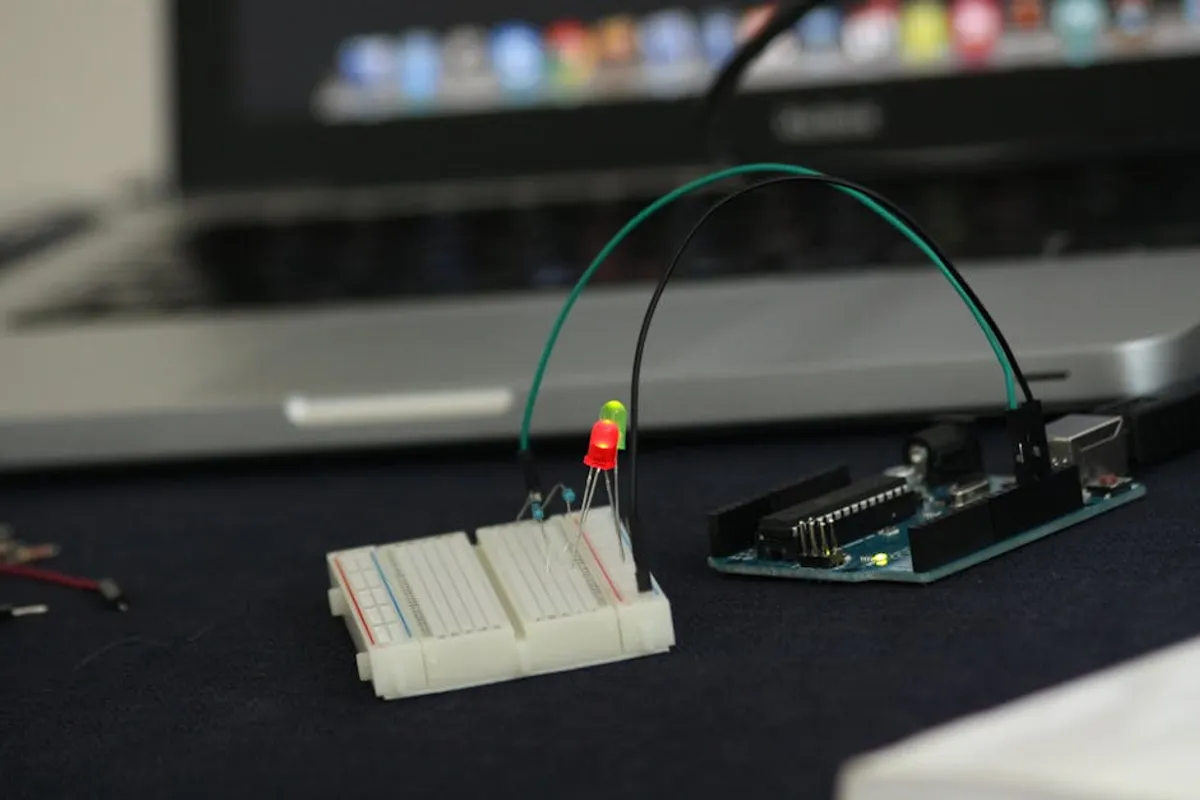
Makers frequently face a foundational decision: Arduino or Raspberry Pi? Both platforms empower creators to build intelligent devices and interactive projects, but their core architectures and optimal use cases diverge significantly. Understanding these differences from the outset prevents project roadblocks, unnecessary expense, and frustration. This guide outlines the distinct capabilities of each platform, detailing where one excels over the other, to inform a commercially sound choice for your specific application.
Arduino: The Microcontroller for Dedicated Control
Arduino boards are microcontrollers designed for direct interaction with physical components and real-time control tasks. They operate on a simpler architecture, executing code sequentially without a full operating system. This simplicity translates into predictable timing, low power consumption, and robust operation for specific, repetitive tasks.
Core Strengths:
- Real-Time Operation: Arduino excels at tasks requiring precise timing, such as reading sensor data at exact intervals or controlling motors with immediate response. Its bare-metal execution ensures minimal latency.
- Direct Hardware Interaction: With numerous digital and analog input/output (I/O) pins, Arduino directly interfaces with sensors, LEDs, switches, and small motors without the overhead of an operating system.
- Power Efficiency: Due to its streamlined design and lack of an OS, Arduino boards consume significantly less power, making them suitable for battery-powered projects or embedded systems where power is a constraint.
- Durability and Simplicity: The absence of complex software layers makes Arduino systems highly stable and less prone to software crashes, ideal for dedicated, long-running applications.
Typical Applications:
Best for: Simple automation, sensor data logging, robotics, IoT device control, interactive art installations, basic home automation, and educational projects focused on electronics.
Consider Arduino for projects like an automated plant watering system, a temperature-controlled fan, or a simple remote-controlled robot. The development environment is straightforward, using a simplified C++ syntax, making it accessible for beginners in electronics and programming.
Raspberry Pi: The Single-Board Computer for Complex Computation
Raspberry Pi boards are single-board computers (SBCs) that run a full operating system, typically a variant of Linux. This capability provides a desktop-like computing experience, enabling complex software applications, network connectivity, and multimedia processing. They offer significantly more processing power and memory compared to microcontrollers.
Core Strengths:
- Processing Power and Memory: Equipped with multi-core processors and gigabytes of RAM, Raspberry Pi can handle demanding computational tasks, run multiple applications simultaneously, and process large datasets.
- Operating System Support: Running Linux allows access to a vast ecosystem of software, libraries, and programming languages (Python, Java, Node.js, etc.). This facilitates web servers, database management, and complex data analysis.
- Connectivity: Built-in Wi-Fi, Bluetooth, Ethernet, and multiple USB ports enable robust networking, peripheral expansion, and integration with cloud services.
- Multimedia Capabilities: With HDMI output and GPU acceleration, Raspberry Pi can display high-resolution graphics and play video, making it suitable for media centers, digital signage, and gaming emulation.
Typical Applications:
Best for: Web servers, media centers, network-attached storage (NAS), advanced robotics with vision processing, machine learning inference, complex IoT gateways, and general-purpose computing tasks.
Choose Raspberry Pi for projects requiring a user interface, internet connectivity, or significant data processing, such as a smart home hub with voice control, a surveillance camera system with object detection, or a small development server.
Core Differentiators: Where They Diverge
The fundamental distinction lies in their design philosophy: Arduino as a dedicated controller, Raspberry Pi as a miniature computer. This impacts performance, complexity, and suitability for various project types.
Processing Power and Real-Time Capability
Raspberry Pi offers superior raw processing power, allowing it to run an operating system and execute complex algorithms. However, this comes with non-deterministic timing due to OS overhead. Arduino, lacking an OS, provides predictable, real-time responses essential for precise control over physical systems. If your project demands millisecond-level timing accuracy for sensor readings or motor control, Arduino's direct hardware access and minimal software stack are advantageous. For data crunching, image processing, or running multiple software services, Raspberry Pi's multi-core CPU is the clear choice.
Connectivity and Peripherals
Raspberry Pi includes integrated Wi-Fi, Bluetooth, and Ethernet, alongside multiple USB ports, offering extensive connectivity out of the box. This facilitates internet-connected projects, external storage, and human interface devices. Arduino boards typically require additional shields or modules for network connectivity, increasing complexity and cost for such features. However, Arduino's strength lies in its abundance of analog and digital I/O pins, making it simpler to interface with a wide array of basic sensors and actuators without complex drivers.
Cost and Power Consumption
Entry-level Arduino boards are generally less expensive than Raspberry Pi models. This cost difference extends to power consumption; Arduino operates on milliwatts, making it ideal for battery-powered or energy-harvesting applications. Raspberry Pi, with its greater processing power, consumes more power, typically requiring a dedicated power supply, which can be a limiting factor for remote or portable projects.
Learning Curve and Community Support
Arduino's C++ based programming environment and focus on direct hardware interaction present a steeper initial learning curve for those unfamiliar with low-level programming. However, its simplicity once mastered offers direct control. Raspberry Pi leverages Python, a widely accessible language, and the familiarity of a Linux environment, which can be more approachable for those with software development experience. Both platforms benefit from extensive, active communities and abundant online resources, tutorials, and project examples.
Pro Tip: For projects requiring both precise real-time control and complex computation or network capabilities, consider a hybrid approach. An Arduino can handle the critical real-time sensor/actuator interactions, while a Raspberry Pi acts as a high-level controller, processing data, managing network communications, and providing a user interface. This leverages the strengths of both platforms.
Making Your Selection
The decision between Arduino and Raspberry Pi hinges on your project's primary requirements. Prioritize real-time control, low power, and direct hardware interaction? Arduino is the logical fit. Need an operating system, significant processing power, network connectivity, or multimedia capabilities? Raspberry Pi provides the necessary foundation. For many makers, the project definition itself dictates the platform. Start with a clear understanding of your project's core functionality, power constraints, and required computational complexity before committing to either. This upfront analysis ensures alignment between your project goals and the chosen platform's inherent strengths.
Frequently Asked Questions
Can Arduino and Raspberry Pi be used together in a single project?
Yes, they are often combined. An Arduino can manage real-time tasks like sensor readings and motor control, sending processed data to a Raspberry Pi, which then handles complex computations, internet communication, or a user interface.
Which platform is better for beginners in electronics?
Arduino is generally considered more beginner-friendly for learning basic electronics and microcontrollers due to its simpler programming model and direct hardware interaction. Raspberry Pi, while accessible with Python, introduces the complexities of an operating system.
What programming languages are primarily used for each platform?
Arduino primarily uses a simplified version of C++ (Arduino IDE). Raspberry Pi supports a wider range of languages, with Python being the most popular, followed by Java, C, C++, and Node.js, among others.
Is one platform inherently more powerful than the other?
Yes, Raspberry Pi is significantly more powerful in terms of processing speed, memory, and general computing capabilities, as it is a single-board computer. Arduino is a microcontroller, optimized for efficient, real-time control with minimal resources, not raw computational power.