Embarking on the journey of learning electronics at home offers a tangible pathway to understanding the devices that define modern life. This pursuit moves beyond theoretical comprehension, providing a practical skill set applicable to repair, innovation, and problem-solving. For individuals considering this field, the initial investment in time and equipment is modest, yet the potential for practical application, from custom circuit design to device modification, is substantial. This guide outlines a structured approach to acquiring fundamental knowledge and hands-on experience, enabling a self-directed learning path from basic principles to functional project execution.
Essential Tools and Equipment for Beginners
Successful home electronics learning hinges on having the right foundational tools. These items facilitate experimentation, measurement, and assembly, minimizing frustration and maximizing learning efficiency. Having the right foundational tools for your workbench will make experimentation and assembly much smoother.
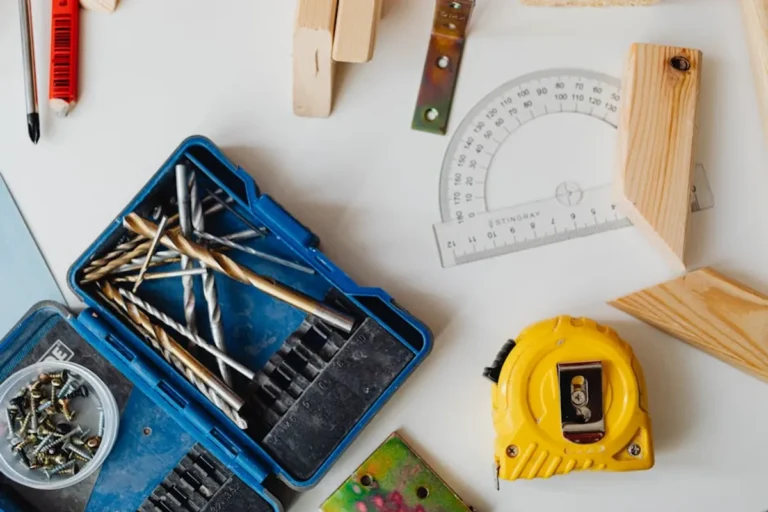
Basic Hand Tools
- Wire Strippers/Cutters: Essential for preparing wires for connections. Opt for a multi-gauge stripper for versatility.
- Small Screwdriver Set: Crucial for disassembling and assembling electronic enclosures. A precision set with various bit types (Phillips, flathead, Torx) is advisable.
- Needle-Nose Pliers: Useful for bending component leads, manipulating small wires, and retrieving dropped parts in tight spaces.
- Soldering Iron and Solder: For permanent circuit connections. A temperature-controlled iron (25-40W) with a fine tip is recommended. Lead-free solder (Sn99.3/Cu0.7) is a common choice, though leaded solder (Sn60/Pb40) melts at a lower temperature and flows more easily, requiring proper ventilation.
- Desoldering Pump or Braid: Necessary for correcting soldering errors or salvaging components.
Measurement Devices
- Digital Multimeter (DMM): The cornerstone of electronic diagnostics. A DMM measures voltage (V), current (A), and resistance (Ω), and often includes continuity and diode test functions. Fluke or Uni-T models offer reliable performance for beginners.
Power Supply
A stable and adjustable DC power supply is critical for testing circuits. While battery power suffices for simple projects, a benchtop power supply (0-30V, 0-5A) provides controlled voltage and current limits, preventing component damage during experimentation.
Prototyping Aids
- Breadboards: Solderless breadboards allow for rapid circuit assembly and modification. They are indispensable for testing concepts before committing to a permanent design.
- Jumper Wires: Used to connect components on a breadboard. Assorted lengths and colors aid in circuit organization.
Core Concepts to Master First
A solid theoretical foundation underpins practical electronics work. Understanding fundamental principles enables effective troubleshooting and innovative design.
Electricity Fundamentals
Begin with the core concepts of electricity:
Voltage (V): The electrical potential difference between two points, driving current through a circuit. Measured in Volts.
Current (I): The flow rate of electric charge. Measured in Amperes (Amps).
Resistance (R): The opposition to current flow. Measured in Ohms (Ω). Ohm's Law (V = IR) is the foundational equation linking these three, providing a framework for calculating circuit behavior.
Basic Components
Familiarize yourself with the function and common applications of passive and active components:
- Resistors: Limit current and divide voltage. Their value is identified by color bands.
- Capacitors: Store electrical energy and filter signals. Characterized by capacitance (Farads).
- Diodes: Allow current flow in one direction only, used for rectification and signal clamping.
- Transistors: Act as electronic switches or amplifiers, forming the basis of integrated circuits. Bipolar Junction Transistors (BJTs) and Metal-Oxide-Semiconductor Field-Effect Transistors (MOSFETs) are common types.
Circuit Diagrams and Schematics
Learning to read and interpret schematic diagrams is non-negotiable. These standardized visual representations depict how components are connected and function within a circuit. Understanding common symbols and conventions accelerates the transition from conceptual design to physical construction.
Pro Tip: When troubleshooting a non-functional circuit, always start by verifying the power supply connections and component orientations. Many beginner errors stem from reversed polarity or loose breadboard connections. Use your multimeter's continuity function to quickly check for breaks in your circuit paths.
Hands-On Learning: Starting Your First Projects
Theory without practice yields limited understanding. Practical projects solidify theoretical knowledge and develop problem-solving skills.
Kit-Based Learning
Begin with pre-designed electronics kits. These kits typically include all necessary components, a circuit board, and detailed instructions, guiding you through assembly and explaining the circuit's operation. Examples include simple LED blinkers, audio amplifiers, or radio receivers.
Breadboard Experiments
Once comfortable with kits, transition to constructing circuits on a breadboard from schematics. Start with basic circuits like a series/parallel resistor network, an LED with a current-limiting resistor, or a simple 555 timer circuit. This iterative process allows for quick modifications and error correction.
Simple Circuit Builds
Progress to slightly more complex, but still manageable, projects. Building a basic power supply, a light-activated switch, or an alarm circuit using discrete components reinforces understanding of component interaction and circuit design principles. Documenting each build, including schematics and observations, aids in long-term retention.
Recommended Learning Resources
A wealth of resources exists to support self-paced learning. Combining different formats often provides the most comprehensive understanding.
Online Courses and Tutorials
Platforms like Coursera, Udemy, and edX offer structured courses from introductory to advanced levels, often including video lectures, quizzes, and practical exercises. YouTube channels dedicated to electronics (e.g., EEVblog, GreatScott!) provide practical demonstrations, teardowns, and project ideas.
Books and Textbooks
Classic textbooks provide in-depth theoretical explanations. "The Art of Electronics" by Horowitz and Hill is a comprehensive reference, while "Practical Electronics for Inventors" by Scherz and Monk offers a more project-oriented approach for beginners. Referencing data sheets for specific components is also crucial for understanding their operating parameters.
Community Forums and Groups
Engaging with online forums (e.g., EEVblog Forum, r/electronics on Reddit) allows you to ask questions, share projects, and learn from experienced practitioners. These communities offer peer support and expose you to diverse perspectives and solutions.
Practical Next Steps for Home Electronics Learners
Consistent engagement and a structured approach are key to sustained progress in electronics. After mastering initial concepts and basic projects, consider specializing. Explore areas like microcontrollers (e.g., Arduino, ESP32), analog circuit design, or power electronics, depending on your interests. Invest in slightly more advanced test equipment as your skills grow, such as an oscilloscope, which is invaluable for visualizing waveforms and debugging dynamic circuits. Always prioritize safety: work in a well-ventilated area, understand the hazards of electricity, and use appropriate personal protective equipment. The iterative process of learning, building, testing, and debugging is central to developing proficiency and confidence in electronics. If you're looking to get started, consider exploring some beginner-friendly electronics kits to build practical projects.
Frequently Asked Questions
Is learning electronics at home expensive?
Initial costs are manageable. A basic toolkit, multimeter, breadboard, and assortment of components can be acquired for under $100-150. Costs increase with specialized equipment like oscilloscopes or advanced project components, but these are not necessary for beginners.
How difficult is it to learn electronics without a formal background?
It requires dedication and a methodical approach, but it is entirely feasible. Numerous self-taught engineers and hobbyists demonstrate that a formal degree is not a prerequisite. Start with fundamental concepts, practice consistently, and leverage available online and print resources.
What are the most common mistakes beginners make?
Common mistakes include incorrect component placement (e.g., reversed polarity for diodes/LEDs), poor soldering techniques, not checking connections thoroughly, and applying excessive voltage without current limiting. Patient troubleshooting and double-checking work prevent most issues.
How important is safety when working with electronics at home?
Safety is paramount. Always be aware of voltage levels, especially when working with mains electricity (AC). Use insulated tools, avoid working with wet hands, and ensure proper ventilation when soldering. Start with low-voltage DC circuits to minimize risk.