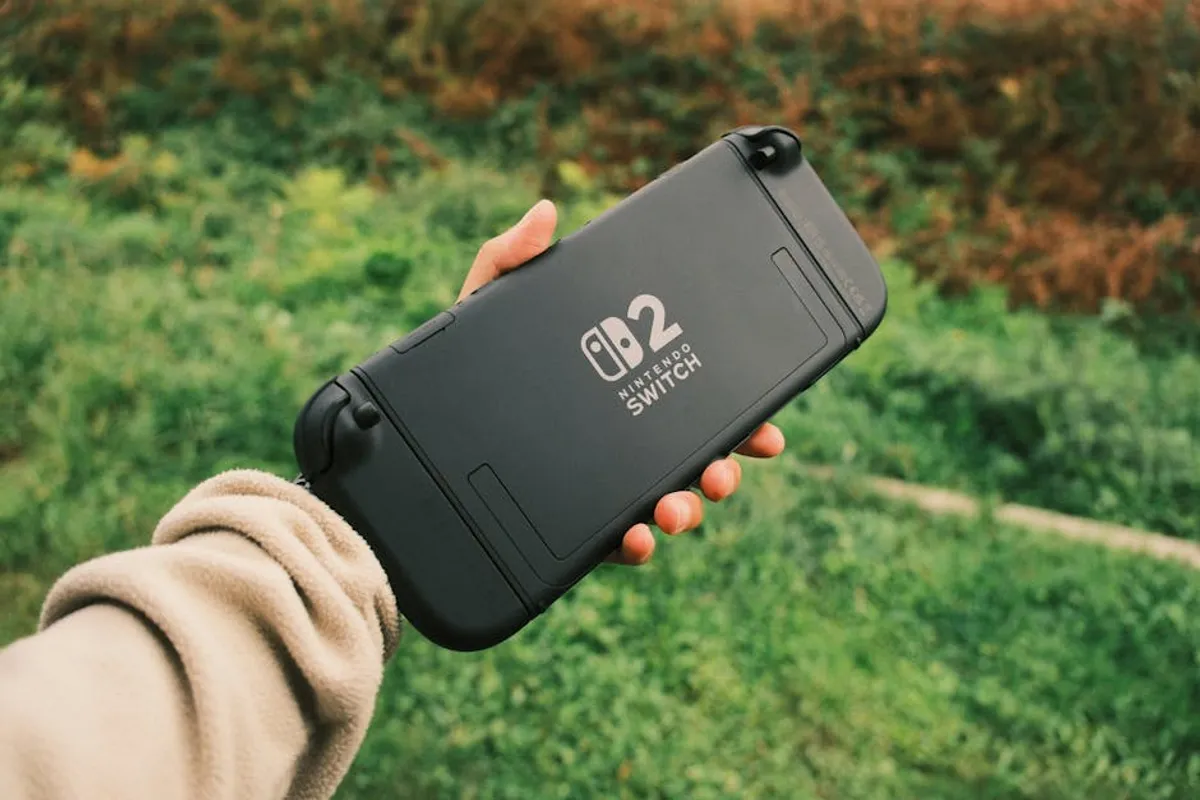
The prospect of a new Nintendo Switch model, widely dubbed the "Switch 2," represents a significant inflection point for the gaming industry, consumers, and peripheral businesses alike. For marketers, content strategists, and retailers, understanding the potential release timeline and technical specifications is not merely about consumer curiosity; it's about anticipating market shifts, preparing inventory, and optimizing content for an inevitable surge in search interest. While official details remain under wraps, a substantial body of speculation, analyst reports, and industry leaks provides a framework for informed preparation. This article synthesizes the most credible information available to outline the likely release window and expected hardware upgrades, offering a commercially relevant perspective on what to anticipate from Nintendo's next-generation hybrid console.
The Anticipated Release Window
Industry analysts and supply chain reports consistently point towards a release window for the Nintendo Switch 2 in late 2024 or early 2025. This timing aligns with typical console refresh cycles and positions the new hardware to capitalize on critical holiday shopping periods. Nintendo's historical release patterns often involve launching major hardware ahead of or during the lucrative Q4 (October-December) sales quarter, or in the Q1 (January-March) period to avoid direct competition with holiday sales of existing consoles and to kickstart the new fiscal year.
Factors influencing this timeline include the availability of key components, the maturity of new technologies, and Nintendo's strategic decision-making regarding its existing Switch ecosystem. A late 2024 launch would maximize holiday sales potential, while an early 2025 debut could allow for further software development and a less congested market entry. The decision will likely balance manufacturing readiness with a robust launch title lineup, which is crucial for initial console adoption.
Expected Core Specifications and Performance Upgrades
The primary driver for a new Switch model is the need for a substantial performance uplift to remain competitive and support more graphically intensive titles. Speculation centers on significant improvements across the board.
Processor and Graphics Capabilities
The most frequently cited upgrade involves a custom Nvidia Tegra system-on-a-chip (SoC), potentially based on the Orin platform or a derivative. This would represent a generational leap from the original Switch's Tegra X1, offering vastly improved CPU and GPU performance.
- Ray Tracing: Expected support for hardware-accelerated ray tracing, enabling more realistic lighting, reflections, and shadows.
- DLSS (Deep Learning Super Sampling): Nvidia's AI-powered upscaling technology is a strong candidate, allowing games to render at lower resolutions and then intelligently upscale to higher output resolutions (e.g., 1080p handheld, 4K docked) with minimal visual degradation, significantly boosting effective performance.
- Performance Target: While not aiming for parity with PlayStation 5 or Xbox Series X, the Switch 2 is anticipated to deliver performance comparable to, or exceeding, the previous generation of dedicated home consoles (PS4/Xbox One) in a portable form factor, with potential for enhanced visuals when docked.
This upgrade is critical for attracting third-party developers, who often face challenges porting modern titles to the current Switch's hardware.
Display Technology and Resolution
While the original Switch OLED model introduced a superior screen, the Switch 2 is expected to build upon this, though the exact panel type remains debated.
Likely Features:
- Screen Size: Rumors suggest a slightly larger screen, potentially around 8 inches, to enhance the portable gaming experience.
- Resolution: A 1080p native resolution for the handheld display is a strong possibility, paired with DLSS to achieve upscaled 4K output when docked.
- Panel Type: While OLED is a possibility for vibrant colors and deep blacks, some reports suggest a high-quality LCD might be used to manage costs, especially if other components are significantly upgraded.
- Refresh Rate: A standard 60Hz refresh rate is expected, with potential for variable refresh rate (VRR) support to smooth out frame rate fluctuations.
Memory and Storage
The current Switch's 4GB of RAM and 32GB/64GB of internal storage are significant bottlenecks for modern games.
Expected Upgrades:
- RAM: An increase to 8GB or 12GB of LPDDR5 RAM is widely anticipated, providing more headroom for complex game assets and multitasking.
- Internal Storage: A base storage of 128GB or 256GB is likely, utilizing faster UFS 3.1 or NVMe storage for quicker load times. Expandable storage via microSD will almost certainly remain, but the internal boost is crucial for out-of-the-box usability.
Battery Life and Portability
Balancing increased performance with sustained battery life in a portable form factor is a key engineering challenge.
Anticipated Improvements:
- Efficiency: The new SoC will likely be built on a more efficient manufacturing process (e.g., 5nm or 4nm), which can significantly improve performance per watt.
- Battery Capacity: A larger battery capacity is possible, but improvements in power efficiency will be the primary driver for maintaining or extending playtimes.
- Form Factor: While potentially slightly larger, the core hybrid design is expected to be maintained, ensuring it remains a highly portable device.
Enhanced Features and User Experience
Beyond raw power, the Switch 2 is expected to introduce refinements and new functionalities to improve the overall user experience.
Controller Innovations
The Joy-Cons are synonymous with the Switch, and their evolution is a point of keen interest.
Potential Enhancements:
- Durability: Addressing the "Joy-Con drift" issue is a high priority, with potential for improved analog stick mechanisms.
- Haptics: More advanced HD Rumble or entirely new haptic feedback systems could enhance immersion.
- Attachment Mechanism: Rumors suggest a new magnetic or more robust locking mechanism for attaching Joy-Cons to the console.
- Backward Compatibility: It is highly probable that existing Joy-Cons will be compatible, at least for multiplayer or less demanding titles.
Connectivity and Docking
Modern connectivity standards are expected to be integrated.
Anticipated Connectivity:
- Wi-Fi 6 or 6E for faster, more stable wireless internet.
- Bluetooth 5.2 or 5.3 for improved peripheral connectivity and lower latency.
- USB-C port for charging and data transfer, likely with DisplayPort Alt Mode for external displays.
- An updated dock capable of 4K output when paired with DLSS upscaling, potentially with additional USB ports or an Ethernet port as standard.
Software and Ecosystem
The user interface and online services are also ripe for evolution.
Expected Software Changes:
- Backward Compatibility: This is a near certainty, allowing the vast library of existing Switch games to run on the new hardware, likely with performance enhancements.
- Operating System: An updated, more responsive OS with potential for new features, improved eShop experience, and enhanced social functionalities.
- Online Services: Potential for a tiered online service with more benefits, cloud gaming integration, or enhanced retro game libraries.
Pro Tip: When evaluating information about unreleased hardware, prioritize reports from established industry analysts, reputable financial news outlets, and supply chain sources over general gaming forums. Official announcements from Nintendo are the only definitive source, and until then, all specifications and release dates are subject to change.
Commercial Implications for Developers and Retailers
The launch of the Nintendo Switch 2 will trigger a cascade of commercial activities. For game developers, it means new technical targets, potential for enhanced visuals and gameplay, and a renewed investment cycle. Retailers will face inventory management challenges, needing to clear existing Switch stock while preparing for the new console and its associated launch titles and accessories. Marketing teams will recalibrate campaigns, focusing on the new console's unique selling propositions and targeting both existing Switch owners looking to upgrade and new consumers entering the ecosystem. Content creators and SEO professionals will see a massive spike in search queries related to "Switch 2 specs," "release date," "pre-order," and "launch games," requiring agile content strategies to capture this demand.
Preparing for the Next Generation
For businesses operating within or adjacent to the gaming sector, proactive planning is essential. Monitor official Nintendo channels for announcements. Track industry analyst reports for shifts in market sentiment and predicted timelines. Consider how a new console will impact consumer purchasing behavior, potential accessory sales, and the digital storefront landscape. Understanding the likely technical capabilities allows for early strategic discussions on game development, marketing messaging, and supply chain logistics. The Switch 2 is poised to reshape a significant segment of the gaming market, and early preparation will be key to capitalizing on its arrival.
Frequently Asked Questions
Will the Nintendo Switch 2 be backward compatible with existing Switch games?
Yes, backward compatibility is widely expected. This allows players to retain their existing game libraries and provides a robust catalog of titles from day one for the new console.
What will be the estimated price of the Nintendo Switch 2?
While unconfirmed, analysts generally predict a price point between $399 and $449. Nintendo typically aims for competitive pricing that balances new technology with market accessibility.
Will the Nintendo Switch 2 replace the original Switch models?
Eventually, yes. Nintendo will likely transition its focus to the new hardware, phasing out older models. However, the original Switch and Switch OLED may continue to be sold at reduced prices for a period, catering to different market segments.
When can we expect official announcements from Nintendo?
Nintendo usually makes major hardware announcements closer to the launch date, often through Nintendo Direct presentations or dedicated press releases. Historically, these announcements occur within 6-12 months of release, suggesting a reveal could happen in mid-to-late 2024.