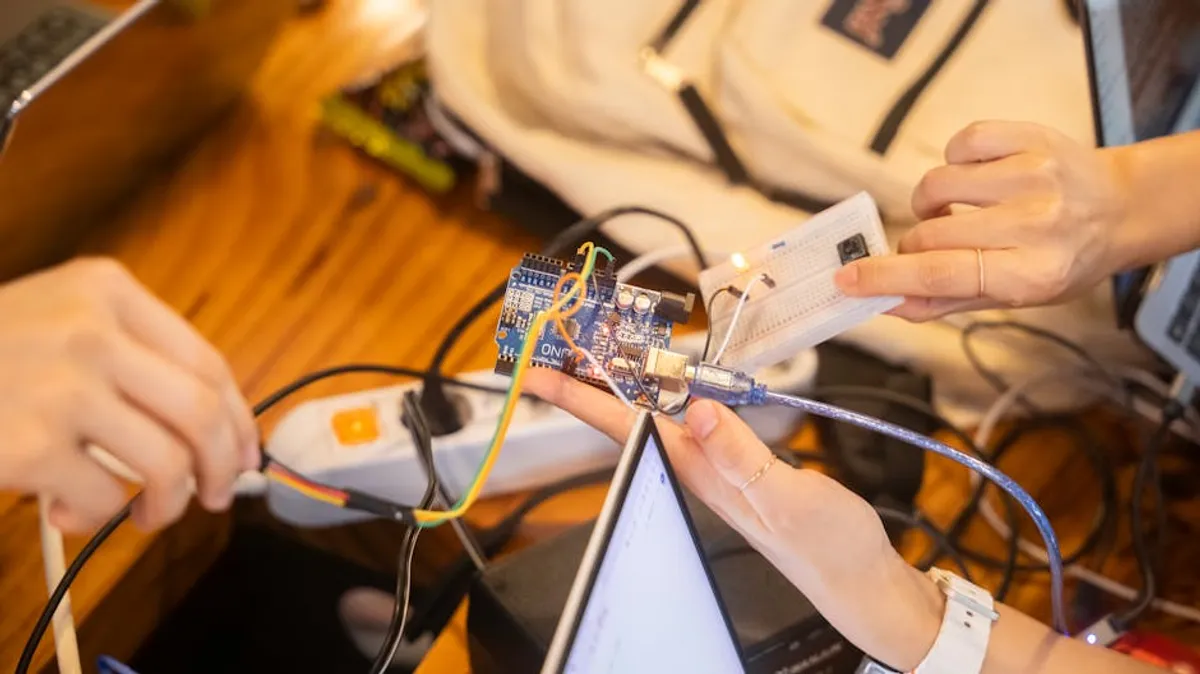
The landscape of maker culture evolves rapidly, driven by advancements in microcontrollers and sensors. For SEO professionals, marketers, agencies, and publishers, understanding these shifts is crucial for identifying emerging content opportunities, product niches, and market trends. As we approach 2026, Arduino continues to serve as a foundational platform for innovation, enabling rapid prototyping and the development of specialized, commercially viable projects. The focus for the coming years centers on integrating more sophisticated functionalities into compact, accessible hardware, moving beyond basic automation to intelligent, data-driven solutions.
This exploration highlights specific Arduino project ideas that demonstrate significant commercial relevance and potential for market penetration by 2026. These are not merely DIY exercises but represent categories poised for growth, offering avenues for content creation, product development, and targeted marketing efforts within the broader tech and hobbyist sectors.
Identifying Emerging Trends in Maker Culture for 2026
The trajectory of maker projects is increasingly influenced by global challenges and technological convergence. Key drivers include the demand for sustainable solutions, the proliferation of artificial intelligence at the edge, and a growing emphasis on personalized health and environmental monitoring. For those tracking market signals, these areas indicate where consumer interest and technical innovation are likely to concentrate. Arduino's open-source nature and extensive community support make it an ideal platform for exploring these complex areas without the high entry barriers of proprietary systems.
Sustainable & Eco-Conscious Devices
Consumer interest in environmental impact and resource efficiency continues to climb. Arduino projects that address sustainability offer tangible solutions for energy management, waste reduction, and resource optimization. These devices often integrate various sensors to collect data, which can then inform user behavior or automate eco-friendly actions.
- Smart Home Energy Monitoring System: This project involves using current sensors (e.g., non-invasive clamp meters) and an Arduino board to monitor household electricity consumption in real time. Data can be logged to an SD card or transmitted wirelessly to a local server or cloud platform for analysis and visualization.
Commercial Relevance: Targets homeowners seeking to reduce utility bills, content creators offering energy-saving tips, and companies developing smart home automation platforms. The data collected can be used for detailed energy audits, identifying inefficient appliances, and optimizing usage patterns. This niche supports content around sustainable living, home efficiency, and IoT device integration.
Edge AI & Machine Learning Integrations
Bringing artificial intelligence capabilities directly to microcontrollers, known as edge AI, reduces latency, enhances privacy, and allows for operation in disconnected environments. Arduino boards, especially those with more powerful processors or dedicated AI accelerators, are becoming central to these applications, enabling devices to make intelligent decisions locally without constant cloud connectivity.
- Gesture-Controlled Interface for Accessibility: Utilizing an Arduino board with an accelerometer and gyroscope, this project develops a device that recognizes specific hand gestures to control external systems (e.g., lights, media players, robotic arms). Machine learning models, often trained on a PC and then deployed to the microcontroller, interpret sensor data to classify gestures.
Commercial Relevance: Addresses the growing market for assistive technology and novel human-computer interaction methods. This area offers opportunities for specialized input devices, educational kits on embedded AI, and custom solutions for industrial or home automation where voice control is unsuitable. Content can focus on accessibility tech, DIY robotics, and practical applications of TinyML.
Personalized Health & Wellness Gadgets
The demand for personal health monitoring and wellness devices remains strong, with a shift towards more personalized and proactive solutions. Arduino allows for the creation of bespoke gadgets that can track specific physiological parameters or environmental factors impacting well-being, often integrating with mobile applications for data display and analysis.
- Personalized Air Quality and Wellness Monitor: This project combines multiple sensors (e.g., for PM2.5, CO2, VOCs, temperature, humidity) with an Arduino board to provide real-time indoor air quality data. The device can offer personalized alerts based on user-defined thresholds or integrate with smart home systems to trigger ventilation.
Commercial Relevance: Taps into the health-conscious market, particularly those concerned with indoor environmental quality. Opportunities exist for niche product development (e.g., monitors for nurseries, workshops, or allergy sufferers), content explaining the impact of air quality, and services offering environmental data analysis or remediation advice. This also feeds into the broader smart home and IoT health markets.
Pro Tip: When evaluating commercial potential for Arduino projects, prioritize scalability and differentiation. A unique feature or a targeted niche can command higher value than a generic solution. Consider how a project can evolve into a kit, a service, or a component for a larger system, rather than just a standalone device. Focus on solving a specific, underserved problem.
Monetization Avenues for Arduino-Inspired Content and Products
For SEO professionals and marketers, these project categories represent fertile ground for content strategy and product development. The maker community is highly engaged and actively searches for tutorials, inspiration, and solutions to common challenges.
- Content Creation: Develop in-depth tutorials, project showcases, and troubleshooting guides around these advanced Arduino applications. Target keywords related to "edge AI Arduino," "sustainable smart home projects," "DIY air quality monitor," and "accessible tech."
Commercial Impact: Drives organic traffic, establishes authority in niche markets, and provides affiliate marketing opportunities for components and tools.
- Product & Kit Development: Design and sell pre-assembled kits for these projects, complete with components, code, and detailed instructions. Offer custom device development services based on these concepts.
Commercial Impact: Direct revenue generation from product sales, catering to makers who prefer convenience or lack specific skills for sourcing components. This also attracts advanced users looking for specialized solutions.
- Community Building & Education: Host workshops, webinars, or online courses focused on these project types. Create forums or social groups dedicated to specific applications (e.g., "Arduino for environmental monitoring").
Commercial Impact: Builds brand loyalty, generates leads for products/services, and creates a platform for thought leadership, which can be monetized through sponsorships or premium content.
Charting Your Course in the Maker Market
The evolution of Arduino projects towards more sophisticated, commercially relevant applications presents a clear opportunity for strategic engagement. By focusing on emerging trends like sustainability, edge AI, and personalized wellness, marketers and publishers can position themselves at the forefront of the maker movement. The key lies in understanding the technical underpinnings enough to identify genuine innovation and then translating that into actionable content or viable product offerings. Prioritize projects that address real-world problems and offer measurable benefits, ensuring your efforts resonate with both the maker community and the broader consumer market looking for advanced, accessible technology.
Frequently Asked Questions
Is Arduino still a relevant platform for new product development in 2026?
Yes, Arduino remains highly relevant. Its open-source nature, extensive community, and growing ecosystem of compatible shields and modules make it ideal for rapid prototyping and niche product development, especially for projects requiring custom hardware and software integration.
What are the primary commercial advantages of focusing on Arduino projects for content marketing?
Arduino projects attract a highly engaged, technically curious audience. Content around these projects can generate significant organic traffic, establish thought leadership in specific tech niches, and provide opportunities for affiliate marketing through component sales and educational resources.
How can I identify profitable niches within the Arduino maker market?
Look for areas where traditional solutions are expensive or inadequate. Focus on problems that can be solved with low-cost sensors and microcontrollers, particularly in emerging fields like environmental monitoring, personalized health, and smart home automation, where customization is valued.